

Introduction
You’ve probably stared at your closet on a Monday morning thinking, “What exactly does business casual even mean?” You’re not alone. Men’s business casual is one of the most misunderstood dress codes in the workplace. It sits right between a full suit and a casual Friday outfit, and that grey zone confuses a lot of people.
Here’s the good news. Once you understand the core principles of men’s business casual, getting dressed becomes fast, easy, and even enjoyable. This guide breaks down everything you need to know. You’ll learn the right pieces to own, the mistakes to avoid, and how to build a wardrobe that works hard for you every day.
Whether you’re new to the office or just tired of second-guessing your outfits, this article gives you a clear, no-fluff roadmap.
What Is Men’s Business Casual, Really?
Men’s business casual means looking polished and professional without wearing a full suit. It signals that you take your work seriously while still being approachable and comfortable.
Think of it this way. You remove the tie. You skip the blazer if you want. But you keep the clean, put-together look.
The key is intentionality. Every item you wear should look like you chose it on purpose, not grabbed it off the floor. source: The Essential Man
The Core Pieces Every Man Needs
Trousers and Chinos
Chinos are the backbone of men’s business casual. They come in navy, khaki, grey, and olive, and they pair well with almost everything.
Your trousers should fit well at the waist and sit clean through the thigh. Avoid anything baggy or overly slim. A straight or tapered cut almost always works best.
Avoid jeans unless your workplace explicitly allows them. Even then, stick to dark wash with no distressing.
Dress Shirts and Button-Downs
A well-fitted dress shirt instantly elevates any outfit. Oxford cloth button-downs in white, light blue, or subtle checks work perfectly for men’s business casual environments.
Make sure the shoulders sit right. The seam should hit exactly at your shoulder joint. A shirt that’s too big or too small undermines everything else you’re wearing.
You can leave the collar open or add a simple knit tie if your office leans more formal.
Blazers and Sport Coats
A blazer is your best friend in a business casual wardrobe. It adds structure and signals effort without being as formal as a suit jacket.
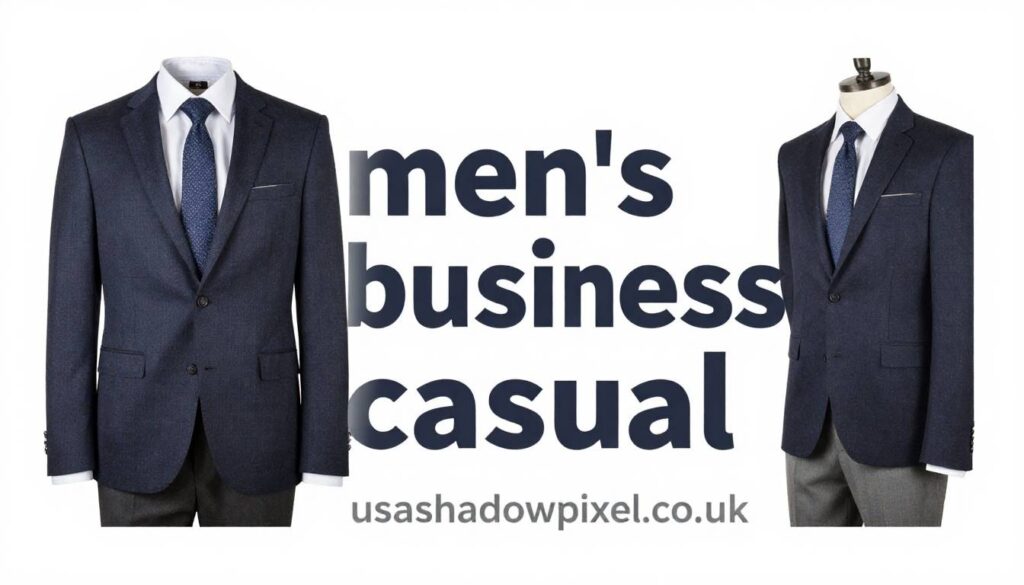
Navy and charcoal grey are the most versatile options. A well-fitted blazer can transform a basic shirt and chino combination into a sharp, professional look.
You don’t have to wear one every day. But having at least one in your rotation gives you flexibility for meetings, presentations, or client visits.
Shoes That Make or Break the Look
Shoes matter more than most men think. In men’s business casual, you want clean, classic footwear.
Good options include:
- Derby shoes or Oxfords in brown or black leather
- Loafers, especially in suede or leather
- Clean leather Chelsea boots
- Smart monk straps for a slightly elevated look
Avoid sneakers, flip-flops, or heavy work boots. Even a great outfit falls apart with the wrong shoes.
Knitwear and Layering
A fine-knit merino wool sweater or a crewneck pullover layers beautifully over a dress shirt. It adds warmth and texture without looking too casual.
Cardigans also work well and give you flexibility to remove layers throughout the day.
Stick to solid colours or simple patterns. Avoid anything with large logos or loud graphics.
Common Men’s Business Casual Mistakes to Avoid
Wearing Clothes That Don’t Fit
Fit is the single most important factor in how you look. A cheap shirt that fits well will always beat an expensive shirt that doesn’t. Take your clothes to a tailor if needed. It costs less than you think and makes a massive difference.
Ignoring Grooming
Your outfit is only part of the picture. Clean, neat grooming completes the look. Keep your hair tidy, your nails clean, and your shoes polished. These small details tell people you pay attention.
Overdoing Casual Elements
One casual element per outfit is fine. Two starts to push the boundary. Three takes you out of business casual territory entirely.
For example, if you wear dark jeans, pair them with a blazer and leather shoes. Don’t add a graphic tee and sneakers on top of that.
Wearing Wrinkled or Worn Clothing
Wrinkles communicate carelessness. Ironed or steamed clothes signal respect for yourself and the people around you. Check your clothes before you wear them. It takes two minutes and it’s worth it.
Building a Capsule Wardrobe for Men’s Business Casual
You don’t need a massive wardrobe. You need the right pieces that mix and match well.
Here is a simple starter list:
- Two pairs of chinos in different colours (navy and khaki work great)
- Three to four button-down shirts in neutral tones
- One or two blazers in navy or grey
- Two pairs of dress shoes, one brown and one black
- A merino wool sweater or two in grey or navy
- A leather belt that matches your shoes
With these pieces, you can create dozens of outfit combinations. That’s the power of a well-built capsule wardrobe.
Men’s Business Casual by Season
Spring and Summer
Lighter fabrics are your friend. Linen trousers, cotton shirts, and breathable blazers keep you comfortable without sacrificing the professional look.
Lighter colours work well too. Tan, light grey, and soft blue all feel appropriate and fresh.
Fall and Winter
Heavier fabrics like wool, tweed, and flannel bring warmth and texture. Layer with knitwear under your blazer. Earth tones and deeper blues and greys suit the season perfectly.
A good overcoat finishes cold-weather business casual outfits with style.
How to Dress for Your Industry
Not every workplace interprets men’s business casual the same way. A law firm leans more formal. A creative agency might lean more relaxed.
Pay attention to how senior people in your workplace dress. That gives you the clearest signal of where the culture sits. When in doubt, dress slightly above what you think is required. It’s easier to dress down than to feel underdressed.
Conclusion
Men’s business casual does not have to feel complicated. Once you build a foundation of well-fitting, versatile pieces, getting dressed becomes second nature. You invest in quality basics. You pay attention to fit. You keep your grooming sharp. And you build outfits with intention.
Start with the essentials listed in this guide. Add pieces over time. You will quickly find that a strong business casual wardrobe is one of the best investments you can make in your professional life.
What’s the one piece you feel most confused about when dressing for a business casual environment? Share it below, or pass this guide along to someone who needs it.
Frequently Asked Questions
1. What counts as men’s business casual? Men’s business casual typically includes chinos or dress trousers, a button-down or polo shirt, optional blazer, and clean leather shoes. It avoids full suits but also avoids purely casual items like jeans or sneakers.
2. Are jeans allowed in men’s business casual? It depends on your workplace. Some offices allow dark wash jeans without distressing. When in doubt, stick to chinos or dress trousers to stay safe.
3. Can I wear sneakers with business casual? Most traditional business casual environments do not allow sneakers. Clean, minimal leather sneakers might work in relaxed creative offices, but leather shoes are the safer and more professional choice.
4. Do I have to wear a blazer for business casual? No, a blazer is optional. But it immediately elevates your look. Having one in your rotation gives you more flexibility, especially for important meetings or presentations.
5. What colours work best for men’s business casual? Navy, grey, white, light blue, khaki, and earth tones are all excellent choices. These colours are easy to mix and match and always look professional.
6. How should business casual trousers fit? They should sit comfortably at your waist without a belt being necessary, fit clean through the thigh, and break slightly at the shoe. Avoid baggy or overly slim fits.
7. Is a polo shirt acceptable for men’s business casual? Yes, a well-fitted polo in a solid colour or subtle pattern works well. Avoid stretched, faded, or logo-heavy polos.
8. What is the difference between smart casual and business casual for men? Business casual leans more formal. It typically includes dress trousers and structured footwear. Smart casual allows more flexibility, including clean jeans and casual shoes.
9. How many outfits can I build from a men’s business casual capsule wardrobe? With 10 to 12 quality pieces, you can realistically build 20 to 30 different outfit combinations. The key is choosing neutral, versatile colours that pair well together.
10. What shoes work best for men’s business casual? Derby shoes, Oxfords, loafers, and Chelsea boots in leather or suede are all excellent choices. Brown leather shoes offer the most versatility across different outfit combinations.
also read: usashadowpixel.co.uk
email: johanharwen@314gmail.com
Author Name: James Harrow
About the Author: James Harrow is a men’s style writer and wardrobe consultant with over eight years of experience helping professionals dress with confidence. He specialises in practical, no-nonsense style advice for everyday men. When he is not writing, he works with corporate clients to build functional, stylish wardrobes that work as hard as they do.