
Businesses rarely need the same transportation solution for every shipment. A single supply chain may involve palletized LTL freight, full truckload shipments, last-mile delivery, expedited transportation, and international freight. That is why understanding what RXO shipping actually includes is more useful than viewing RXO as simply another trucking company.
RXO is an asset-light transportation platform whose largest business is truck brokerage. It connects shippers with qualified independent carriers through its technology platform, while also providing managed transportation, last-mile, freight forwarding and other complementary services. RXO’s current business model is important because, in many cases, the company arranges transportation rather than operating the truck that physically carries the shipment.
For LTL shippers, RXO can be especially relevant because the company works with a broad group of national, regional and specialized LTL providers and has continued expanding its LTL capabilities. In September 2026, RXO said its network included more than 125 LTL providers alongside a broader carrier network exceeding 125,000 carriers.
What Is RXO Shipping?
RXO shipping is the process of using RXO’s transportation brokerage, LTL, managed transportation, technology and related logistics services to move freight from origin to destination.
The exact service depends on the shipment. A business shipping a few pallets may need LTL transportation, while a high-volume manufacturer might use a combination of truckload, LTL, managed transportation and dedicated services.
RXO’s current offering includes:
- Less-than-truckload transportation
- Full truckload transportation
- Managed transportation
- Last-mile delivery
- Middle-mile solutions
- Freight forwarding
- Time-critical and expedite services
- Customs clearance and cross-border logistics
RXO also states that its network includes more than 150,000 independent carriers and approximately 1.8 million independent trucks across North America, although specific network figures can vary by service and reporting period.
The practical advantage for a shipper is access to multiple transportation options without having to manage every carrier relationship independently.
How Does RXO LTL Shipping Work?
RXO LTL shipping is designed for freight that does not require an entire trailer, with RXO using its network and logistics expertise to match shipments to appropriate LTL providers.
LTL transportation is commonly used for palletized or boxed commercial freight that shares trailer capacity with other shipments. RXO’s own guidance describes LTL as a cost-effective choice for smaller shipments and notes that shipments of roughly six pallets or less and generally up to 10,000 pounds may be suitable, although actual suitability depends on the freight, lane, service requirements and carrier.
A typical LTL shipment involves several important inputs:
| Shipping factor | Why it matters |
|---|---|
| Origin and destination | Determines the available carrier network and transit options |
| Weight and dimensions | Affect rating, capacity and handling |
| Freight class | Can materially affect LTL pricing |
| Commodity | Helps determine classification and handling requirements |
| Accessorial services | Liftgate, appointment and limited-access services can change the final cost |
| Delivery requirements | Time-sensitive or specialized freight may need a different service |
| Packaging | Strong packaging helps reduce damage exposure and claim problems |
An important consideration is freight classification. RXO notes that changes to the NMFC classification system have increased the importance of accurately reviewing freight classes and density, particularly for lower-density products. Incorrect classification can contribute to unexpected charges, delays or billing disputes.
Why Use RXO for LTL Freight?
The strongest argument for using a brokered LTL model is choice.
Instead of selecting one carrier for every shipment, a logistics provider can evaluate multiple carrier options based on lane, service requirements, equipment and cost. RXO’s September 2026 partnership announcement states that its LTL network includes more than 125 national, regional and specialized providers.
That can be valuable when a shipper has inconsistent freight profiles. For example, a retailer may need one option for dense palletized goods, another for temperature-controlled products and another for locations that require specialized delivery services.
RXO’s LTL strategy can therefore be viewed less as “pick one carrier” and more as match each shipment to the right transportation option.
This distinction can improve:
Shipping efficiency: Multiple carrier options can make it easier to find practical coverage for different lanes.
Freight optimization: Shipment characteristics can be matched with service capabilities rather than relying on a one-size-fits-all provider.
Transportation cost savings: Competitive carrier options may provide opportunities to reduce transportation costs, although actual savings depend on the shipment and market.
Supply chain efficiency: Centralizing transportation activity can reduce the administrative workload associated with managing multiple freight providers.
How Does RXO Connect Improve Shipment Visibility?
RXO Connect is RXO’s digital platform for managing freight, accessing transportation capacity and improving shipment visibility.
RXO says the platform provides current visibility into freight in transit and available transportation capacity, with real-time data and analytics available in one place. Its annual report describes RXO Connect as a cloud-based digital brokerage platform incorporating pricing technology, mobile functionality, API integrations, dashboards and real-time capabilities for transacting and tracking freight.
For shippers, the technology can support:
- Real-time shipment tracking
- Load booking and tendering
- Digital documentation
- Pricing and quoting
- Shipment status visibility
- Analytics and reporting
- Invoice and paperwork access
RXO also supports API and EDI integrations, allowing shippers to connect its freight network with an existing transportation management system rather than forcing teams to operate entirely inside another standalone portal. RXO specifically says its integrations can support instant quotes, online freight booking, paperwork, billing connections and automated workflows.
That matters for larger shipping operations because transportation technology becomes most useful when it reduces duplicate data entry and keeps shipment information synchronized across systems.
What Should Shippers Know About LTL Freight Damage and Claims?
Packaging and documentation are two of the most important areas a shipper can control.
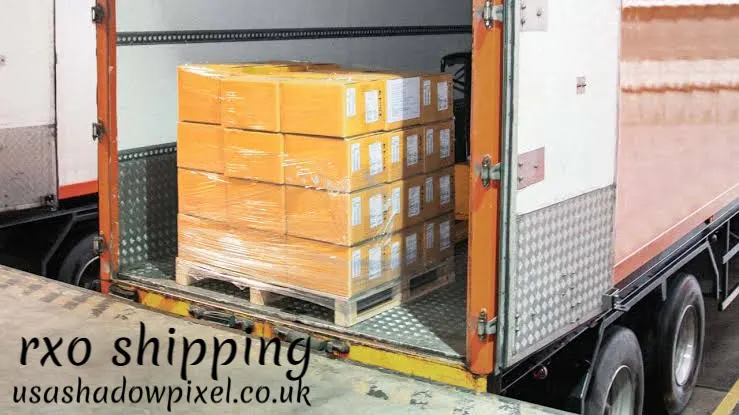
LTL freight can be handled through multiple trucks, terminals and transfer points. RXO’s guidance emphasizes that higher-class, lower-density freight can be more susceptible to damage and that inadequate packaging can create problems when filing damaged freight claims.
Before pickup, shippers should check that freight is:
- Properly wrapped and secured
- Evenly stacked
- Contained within the pallet footprint
- Clearly labeled when fragile
- Marked when freight should not be stacked
- Prepared according to applicable packaging requirements
Documentation matters too. When damage occurs, the shipper should record the condition of the cargo and packaging promptly and retain the relevant shipment documents.
This is where professional freight management can add value. RXO’s managed transportation control tower services include oversight of freight audits, payments, claims and carrier processes, helping businesses centralize activities that are often scattered across multiple teams.
How Can RXO Help With Freight Billing?
The key benefit is greater visibility into freight charges and transportation activity.
LTL billing can be complicated because the initial quote may not always represent the final invoice. Accessorial services, location characteristics, shipment measurements, classification and other factors can influence the final amount.
RXO has invested in technology intended to improve this process. In 2024, RXO partnered with Shiplify to integrate location data into RXO Connect and provide LTL shippers with better visibility into accessorial charges before delivery.
For shippers, this creates an important practical lesson: comparing freight rates alone is not enough. A better evaluation should consider total landed transportation cost, including likely accessorials, billing accuracy and administrative effort.
How Should You Choose an LTL Provider Through RXO?
Choosing an LTL provider should start with your shipping requirements, not simply the lowest quoted rate.
Consider the following questions before selecting a carrier or transportation solution:
- Does the carrier serve the origin and destination reliably?
- What transit time is realistic for the lane?
- Does the carrier handle your commodity appropriately?
- Are liftgate, appointment, residential or limited-access services required?
- How strong is the carrier’s delivery performance?
- How easy is it to track freight and access documents?
- What is the process for damaged freight claims?
- How transparent are accessorials and freight billing?
The broader lesson is that LTL provider selection is a service decision as much as a pricing decision. RXO’s own materials stress the importance of matching the carrier to the shipment’s location, freight type and service priorities.
RXO Shipping vs. Direct LTL Carrier: Which Is Better?
A direct relationship with an LTL carrier can make sense when a shipper has predictable volume and highly consistent lanes.
A brokered model such as RXO can be more attractive when the business has:
- Multiple origin-destination combinations
- Variable shipping volumes
- Different freight types
- Specialized delivery requirements
- A need for multiple transportation modes
- Limited internal freight-management resources
The difference is essentially specialization versus network flexibility.
A direct carrier relationship can provide depth with one provider. A brokerage can provide access to multiple providers and use technology and carrier relationships to manage that complexity.
For companies operating both LTL and truckload freight, the model can also simplify transportation management because RXO provides both LTL and full-truckload solutions. Its managed transportation operation is designed to coordinate complex transportation programs across multiple modes and providers.
What Are RXO’s Main Logistics Locations?
RXO is headquartered in Charlotte, North Carolina. Its published contact information also identifies business locations associated with freight forwarding and managed transportation in Naperville, Illinois, home delivery and last-mile operations in Marietta, Georgia, dedicated transportation in Clive, Iowa, and expedite operations in Buchanan, Michigan, and Statesville, North Carolina. These are published contact locations rather than an exhaustive list of every RXO facility or office.
For businesses searching for “RXO Logistics locations,” it is therefore more useful to identify the correct RXO service division than to assume every location provides every transportation service.
What Is the Difference Between RXO Tracking and RXO Connect?
RXO Connect is the broader shipper technology platform, while specific tracking tools may depend on the service being used.
RXO Connect supports shipment visibility across transportation operations, including tracking and freight-management functions.
For last-mile shipments, RXO also operates an Order Tracker that allows users to track certain deliveries using a retailer reference number and phone number.
This distinction is useful because entering a last-mile shipment into a general freight workflow may not produce the same experience as tracking a shipment through the dedicated order-tracking system.
Does RXO Deliver Freight for Amazon?
Yes, RXO participates in certain Amazon transportation programs, but Amazon-related availability depends on the specific marketplace, shipment type and program.
This is an area where online information can be misleading.
Amazon’s current documentation for certain U.S. Seller Central shipping workflows states that “RXO as a broker doesn’t support LTL as a shipping solution” for that particular program. At the same time, Amazon documentation for UK/EU cross-border fulfillment identifies RXO as a partnered carrier for certain palletized LTL and FTL programs.
The safest conclusion for an Amazon seller is therefore to check the transportation options displayed in the seller’s current Send to Amazon workflow rather than assuming RXO is available for every Amazon shipment.
That distinction also explains why a seller may see RXO in an Amazon workflow in one region but not another.
A Practical RXO Shipping Workflow
For businesses evaluating RXO as a shipping partner, a streamlined process looks like this:
Step 1: Define the shipment.
Record the commodity, dimensions, weight, pallet count, origin, destination and delivery requirements.
Step 2: Validate classification and accessorial needs.
Incorrect freight classification or overlooked services can create billing discrepancies later.
Step 3: Compare transportation options.
Determine whether LTL, truckload, expedited or another mode best fits the shipment.
Step 4: Book and integrate.
Use RXO Connect or an existing TMS integration through supported API or EDI connections.
Step 5: Monitor the shipment.
Use real-time shipment visibility and status updates to identify potential delays early.
Step 6: Reconcile the invoice.
Compare the billed freight charges with the original shipment details and investigate unexpected accessorials.
Step 7: Manage exceptions quickly.
Document damage, delays or delivery issues immediately and begin claims or dispute resolution as required.
This workflow turns freight management from a reactive task into a more structured transportation-management process.
Is RXO a Good Shipping Partner for Your Business?
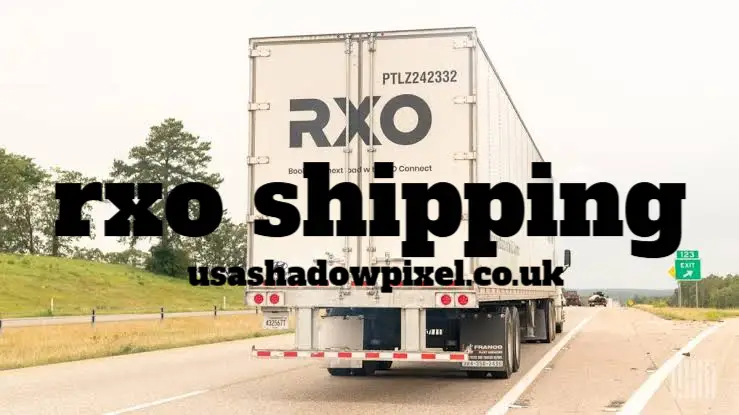
RXO can be a strong fit for businesses that need access to multiple carriers, technology-enabled freight management and flexible transportation solutions rather than a single fixed carrier relationship.
Its current scale, LTL network, technology capabilities and complementary services make it particularly relevant to shippers with complex transportation requirements. RXO reported that LTL volume increased 3% year over year in the second quarter of 2026, while total brokerage volume increased 2%, showing that LTL remains an active part of its brokerage business.
However, no logistics provider is automatically the best option for every lane. Businesses should evaluate service coverage, transit time, freight characteristics, delivery performance, claims processes, technology integrations and total transportation cost before committing to a long-term arrangement.
The most useful way to think about RXO shipping is therefore not simply as a freight carrier. It is a technology-enabled transportation and logistics platform that can connect shippers with a wider carrier network and coordinate several transportation services under one relationship. That model can help businesses simplify shipping operations while improving visibility, flexibility and supply chain efficiency.
source: rxo.com
Custom FAQs
What is RXO Connect?
RXO Connect is RXO’s digital freight platform for shippers and carriers. It provides freight visibility, transportation data, booking and tracking capabilities, analytics and integrations. RXO says the platform uses real-time data and supports API integrations, dashboards and other digital tools for transportation management.
Where are RXO Logistics locations?
RXO is headquartered in Charlotte, North Carolina. Its published business contact locations include Naperville, Illinois; Marietta, Georgia; Clive, Iowa; Buchanan, Michigan; and Statesville, North Carolina, across different transportation divisions. RXO’s contact page is not intended to be a complete list of every operating location.
How do I track an RXO shipment?
For many shipper-managed freight movements, shipment visibility is available through RXO Connect. For certain last-mile deliveries, RXO provides a dedicated Order Tracker using a retailer reference number and phone number. The correct tracking method depends on the service and shipment type.
What should I know about RXO delivery?
RXO’s services cover multiple stages of freight movement, including LTL, truckload, middle mile and last mile. Last-mile services are particularly focused on large or bulky goods and provide shipment visibility through RXO Connect.
Does RXO ship Amazon orders?
RXO supports certain Amazon transportation programs, but availability varies by region and shipment type. Amazon documentation currently identifies RXO in some UK/EU partnered pallet programs, while a U.S. Seller Central workflow states that RXO as a broker does not support LTL as a shipping solution for that specific program. Sellers should rely on the options shown in their current Amazon workflow.
Is RXO an LTL carrier or a logistics provider?
RXO is primarily an asset-light transportation and freight brokerage company rather than a traditional single-fleet LTL carrier. It arranges transportation through independent carriers and also provides managed transportation, last-mile, freight forwarding and other logistics services. RXO says its LTL network includes more than 125 providers.
Also Read