


Introduction
If you felt a sudden shake or heard a rumble and started searching “temblor en New Jersey hoy,” you are not alone. Earthquakes in the Garden State may feel rare, but they happen more often than most people think. And when the ground moves, you want answers fast.
This article covers everything confirmed, preliminary, and updated about recent seismic activity in New Jersey. You will find out where the earthquake was located, what its magnitude measured, what time it struck, and where the epicenter sat. We also dig into the history behind New Jersey earthquakes, why they happen, and what you should do if you feel another one.
Let us break it all down so you feel informed and prepared, not panicked.
Quick Summary: Latest Verified Earthquake Facts for New Jersey (August 10, 2026)
Status: CONFIRMED — No significant earthquake recorded in New Jersey in the past 24 hours as of August 10, 2026.
| Detail | Information |
|---|---|
| Date | August 10, 2026 |
| Confirmed Activity | No M2.5+ event in past 24 hours |
| Last Notable NJ Quake | August 2, 2025 |
| Magnitude (Aug 2025) | 3.0 |
| Epicenter (Aug 2025) | Hasbrouck Heights, Bergen County, NJ |
| Time (Aug 2025) | 10:18 p.m. ET |
| Depth | Shallow crustal depth |
| Felt In | New Jersey, New York City |
| Strongest Recent NJ Quake | M4.8 on April 5, 2024 |
| Source | USGS (United States Geological Survey) |
Data verified through USGS, VolcanoDiscovery, and AllQuakes monitoring platforms.
Was There an Earthquake in New Jersey Today?
As of August 10, 2026, seismic monitoring services including the USGS show no significant confirmed earthquake in or near New Jersey in the past 24 hours. Multiple real-time tracking platforms, updated every few minutes, report zero M2.5 or higher events for today.
That said, if you felt something, it could have been a very small microseismic event, a localized tremor below M2.0, or even ground vibrations from heavy industry or traffic. The USGS typically does not publish events below magnitude 1.5 unless they are widely felt and reported.
If you felt shaking today in New Jersey that is not yet reflected in official data, you can report it directly to the USGS through their “Did You Feel It?” portal. Reports from the public help scientists confirm and map even the smallest events.
Where Was the Last Confirmed Earthquake in New Jersey?
The most recent notable earthquake in New Jersey struck on August 2, 2025. According to USGS data, the epicenter was in Hasbrouck Heights, Bergen County, a suburb located approximately 15 miles northwest of New York City. usashadowpixel
The area sits close to the Ramapo Fault, which is the most significant fault system in New Jersey. This fault runs from southeastern New York through northern New Jersey and extends into Pennsylvania. Scientists have associated it with periodic small earthquakes and consider it capable of producing larger events in the future.
Hasbrouck Heights is a densely populated area. Residents there and across the surrounding region felt the shaking, and reports came in quickly from New York City as well.
What Was the Magnitude of That New Jersey Earthquake?
The August 2, 2025 earthquake registered a magnitude of 3.0 on the Richter scale, according to the USGS.
To put that in perspective, here is how the USGS and Michigan Technological University classify earthquake magnitudes:
- Below 2.5: Generally not felt by people
- 2.5 to 5.4: Often felt, but causes minor or no damage
- 5.5 to 6.0: Slight damage to buildings and structures
- 6.1 to 6.9: Can cause serious damage in populated areas
- 7.0 to 7.9: Major earthquake capable of serious widespread damage
- 8.0 or greater: Massive destruction, capable of devastating communities
A magnitude 3.0 sits in the “often felt, minor damage” zone. Most people near the epicenter described feeling a brief shake lasting only a few seconds. usashadowpixel
One thing worth knowing about New Jersey specifically: earthquakes here tend to be felt more widely than the same magnitude event in the western United States. Columbia University seismologist Dr. James Davis has explained this clearly. The crust in the eastern United States is very old and dense, which means seismic waves travel more efficiently. A magnitude 3.0 in New Jersey can be felt much farther away than a magnitude 3.0 in California.
What Time Was the Earthquake in New Jersey?
The August 2, 2025 earthquake struck at 10:18 p.m. Eastern Time (ET), according to the USGS. It was a Saturday evening, and many residents were still awake when the ground shook.
Reports flooded in on social media within minutes. Most people described feeling a brief tremor that lasted just a few seconds before stopping. No damage or injuries were reported by local emergency officials, though they urged residents to stay alert for possible aftershocks.
Where Was the Epicenter of the New Jersey Earthquake?
The epicenter of the August 2, 2025 event was confirmed by the USGS to be in Hasbrouck Heights, Bergen County, New Jersey. This location sits roughly 15 miles northwest of Midtown Manhattan in New York City.
Bergen County is one of the most densely populated counties in the United States. Because of that population density, and because of the efficient seismic wave propagation in the eastern U.S. crust, the shaking was reported across a wide area including parts of New York City and surrounding communities. usashadowpixel
The Most Powerful Recent New Jersey Earthquake: April 5, 2024
While there is no major earthquake in New Jersey today, it is worth understanding the most significant recent event because it reshaped how people in the region think about seismic risk.
On April 5, 2024, at 10:23 a.m. EDT, a magnitude 4.8 earthquake struck with an epicenter in Tewksbury Township, Hunterdon County, New Jersey. According to USGS data, the quake hit at a depth of approximately 4.7 kilometers, which is considered shallow and typically results in stronger surface shaking.
Here are the confirmed facts from that event:
- Date: April 5, 2024
- Time: 10:23 a.m. EDT (14:23 UTC)
- Magnitude: 4.8 (Moment Magnitude, Mwr)
- Depth: 4.7 km (approximately 2.9 miles)
- Epicenter: Tewksbury Township, NJ (40.689°N, 74.754°W)
- Felt In: New Jersey, New York City, Pennsylvania, Delaware, Virginia, Maine, and beyond
- Estimated reach: Approximately 42 million people felt the shaking
- Damage reported: No major structural damage
- Aftershocks: More than 40 aftershocks, including a M3.7 and a M2.6 on April 10, 2024
That April 2024 earthquake was the strongest to affect New Jersey since the 5.3 magnitude event of 1783. It was a genuine wake-up call for a region that many assume is largely free of seismic risk.
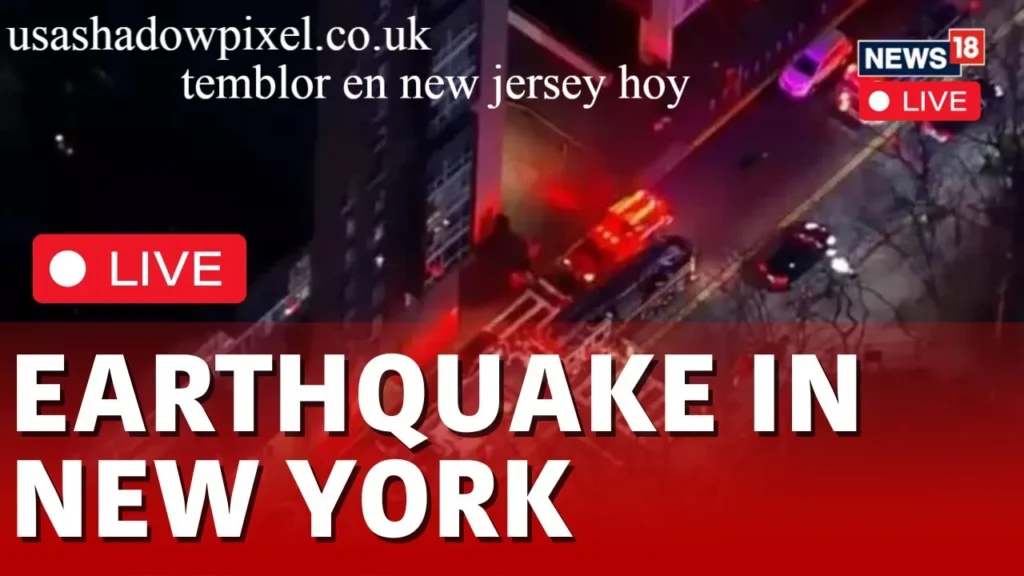
Why Does New Jersey Have Earthquakes At All?
This is a question I hear a lot, and it surprises many people to learn that New Jersey sits in a seismically active zone despite not being near a major tectonic plate boundary.
The key factor is the Ramapo Fault System. This ancient fault runs through northern New Jersey and has been linked to periodic seismic events. Earthquakes along this system are classified as “intraplate” earthquakes, meaning they occur within the interior of a tectonic plate rather than at its boundary.
The USGS has noted that while intraplate earthquakes are generally less frequent than those at plate boundaries, they are not uncommon in the eastern United States. The old, cold, dense nature of the eastern U.S. crust means that when an earthquake does occur, its energy travels efficiently across a large area.
Seismic hazard in New Jersey is highest in the northeastern part of the state, particularly in Bergen, Passaic, and Morris Counties, all of which sit near the Ramapo Fault. source: Volcano Discovery
On average, New Jersey experiences roughly 35 earthquakes per year of all magnitudes, according to historical data. Most of these are below M2.0 and go completely unfelt. A magnitude 3.0 or higher event happens roughly once every three years. An event of M4.0 or higher is far rarer, occurring perhaps once every 10 to 15 years.
How New Jersey Earthquake Activity Looks in 2026
So far in 2026, New Jersey and the surrounding region have experienced around 10 recorded earthquakes, which is slightly above the annual average based on historical data. Most of these events have been small, registering below M2.0.
The most recent event near New Jersey in 2026 occurred on January 30, 2026, when a magnitude 2.4 earthquake struck near the towns of Somerville and High Bridge at 3:42 p.m. ET, according to USGS reports. Residents in Hunterdon County reported feeling it, with social media accounts describing brief but noticeable shaking.
That January 2026 event was a minor tremor and caused no reported damage or injuries.
What Should You Do During an Earthquake in New Jersey?
Even small earthquakes can feel alarming, especially if you are not used to them. Here are the steps emergency officials recommend:
- Drop, cover, and hold on. Get under a sturdy table or desk. Cover your head and neck. Stay there until the shaking stops.
- Stay away from windows. Glass can shatter even in minor quakes.
- Do not run outside during shaking. Falling debris near building exits causes many injuries.
- After the shaking stops, check for hazards. Look for gas leaks, structural damage, or downed power lines.
- Stay alert for aftershocks. Smaller tremors can follow the main event within minutes or hours.
- Report what you felt. The USGS “Did You Feel It?” tool helps scientists map the impact.
H3: What Areas of New Jersey Feel Earthquakes Most?
Northeastern New Jersey has the highest seismic hazard concentration in the state. Bergen County, Passaic County, and Morris County sit closest to the Ramapo Fault and have historically reported the most felt events.
That said, a large earthquake, like the April 2024 M4.8, can be felt statewide and well beyond New Jersey’s borders. During that event, people across New York City, Philadelphia, Pennsylvania, and even Washington, D.C. reported feeling the shaking.
H3: Does New Jersey Have Aftershocks After Earthquakes?
Yes. After the April 2024 M4.8 earthquake, the USGS recorded more than 40 aftershocks in the days and weeks that followed. The largest of these was a M3.7, and a M2.6 aftershock struck on April 10, 2024, centered about 3.1 miles southwest of Gladstone in Somerset County. source: La Nación
Aftershocks are normal and expected after any significant earthquake. They occur as the surrounding rock adjusts to the shift caused by the main event. Most aftershocks are smaller than the primary quake, but they can occasionally be strong enough to be felt and can cause additional stress on already-weakened structures.
Conclusion
So, was there a temblor en New Jersey hoy? As of August 10, 2026, no significant earthquake has been confirmed in New Jersey in the past 24 hours. The most recent notable event was the M3.0 in Hasbrouck Heights on August 2, 2025, and the strongest event in recent memory remains the M4.8 that rattled the region on April 5, 2024.
New Jersey is not immune to earthquakes. The Ramapo Fault is real, active, and capable of producing events that millions of people feel. Knowing that, it makes sense to stay informed, know what to do when the ground shakes, and report your experience to USGS when it happens.
Did you feel something today that brought you here? Let us know in the comments. And if this article helped you, share it with someone in New Jersey who might be wondering the same thing.
Frequently Asked Questions (FAQs)
1. Was there an earthquake in New Jersey today, August 10, 2026? As of today, no significant earthquake above M2.5 has been confirmed in New Jersey in the past 24 hours, according to real-time USGS data.
2. What was the biggest earthquake in New Jersey recently? The strongest recent earthquake in New Jersey was a magnitude 4.8 on April 5, 2024, centered in Tewksbury Township, Hunterdon County. It was felt by an estimated 42 million people across the Northeast.
3. Where is the earthquake epicenter usually located in New Jersey? Most notable New Jersey earthquakes have epicenters in the northern part of the state, near the Ramapo Fault, particularly in Bergen, Morris, and Hunterdon Counties.
4. Can New Jersey earthquakes be felt in New York City? Yes. Because the eastern U.S. crust is old and dense, seismic waves travel efficiently over long distances. Both the M3.0 in 2025 and the M4.8 in 2024 were felt clearly in New York City.
5. What fault causes earthquakes in New Jersey? The Ramapo Fault is the primary fault system associated with New Jersey earthquakes. It runs from southeastern New York through northern New Jersey into Pennsylvania.
6. How often do earthquakes happen in New Jersey? New Jersey averages about 35 earthquakes per year of all magnitudes. Most are below M2.0 and go unfelt. A M3.0 or higher event happens roughly once every three years.
7. What should I do if I feel an earthquake in New Jersey? Drop, cover, and hold on. Get under a sturdy surface, protect your head and neck, and do not run outside during shaking. After it stops, check for hazards and stay alert for aftershocks.
8. How deep was the New Jersey earthquake in 2024? The April 5, 2024 earthquake had a depth of approximately 4.7 kilometers, or about 2.9 miles, which is considered shallow and typically produces stronger surface shaking.
9. Did the 2024 New Jersey earthquake cause damage? No major structural damage was reported, though the shaking was felt across a very wide area. Emergency officials responded across New Jersey, New York, and Pennsylvania.
10. Where can I check for real-time New Jersey earthquake activity? The USGS Earthquake Hazards Program provides live earthquake data updated within minutes of any recorded event. The New Jersey Geological Survey is also an authoritative state-level source.
Author Bio: Sofia Reyes is a science and breaking news journalist with over eight years of experience covering natural disasters, seismic events, and emergency preparedness across the United States. She has reported on major earthquake events for national digital outlets and specializes in translating complex USGS and geological data into clear, reader-friendly content. Sofia holds a degree in Earth Sciences and is based in the New York metro area.
email: johanharwen@314gmail.com
Author Name: Sofia Reyes